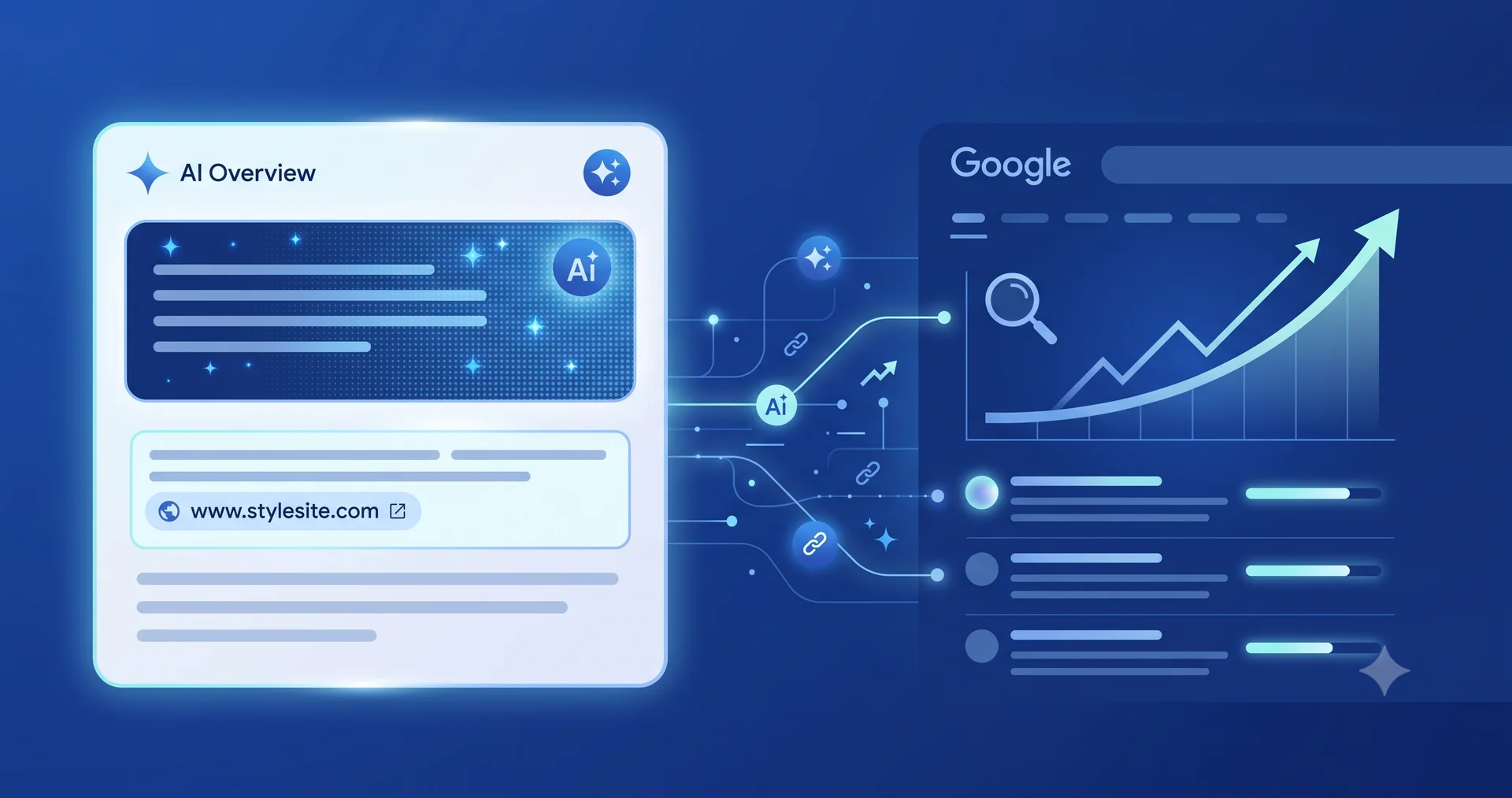

Respuesta de IA de Google (Gemini/AI Overview) citando una web como fuente junto a resultados de Google con la visibilidad al alza

How to Appear in Gemini: Get Google’s AI to Recommend You

Appearing in Gemini means getting Google’s artificial intelligence to cite your site as a source when someone asks it a question. Unlike ChatGPT, Gemini relies on Google’s index and on AI Overviews, so if your site does not rank in the search engine, the AI will not consider it. Getting there depends on your SEO, on clear content and on your brand’s authority. As a search marketing agency in Barcelona, we prepare your site so Google’s AI finds you and recommends you.

What you will learn in this guide

  • How Gemini works: why it depends on Google’s index
  • Gemini vs ChatGPT: how the optimisation differs
  • Concrete actions: technical work, content and authority to get cited
  • Local and measurement: appearing in your area and checking whether you already do

Contenido

What appearing in Gemini means (and why it depends on Google)

Appearing in Gemini means Google’s AI mentions or links to you as a source within its answers, both in the Gemini chat and in the AI Overviews shown in search. Being in the list of blue links is no longer enough: more and more users receive a generated answer and only visit the sites the AI decides to cite.

The key difference from other models is that Gemini lives inside Google’s ecosystem. Your visibility in the AI is therefore tied directly to your organic rankings. Whoever starts working on it now will have a head start when AI search becomes the norm.

How Gemini works: it uses Google's index as a filter

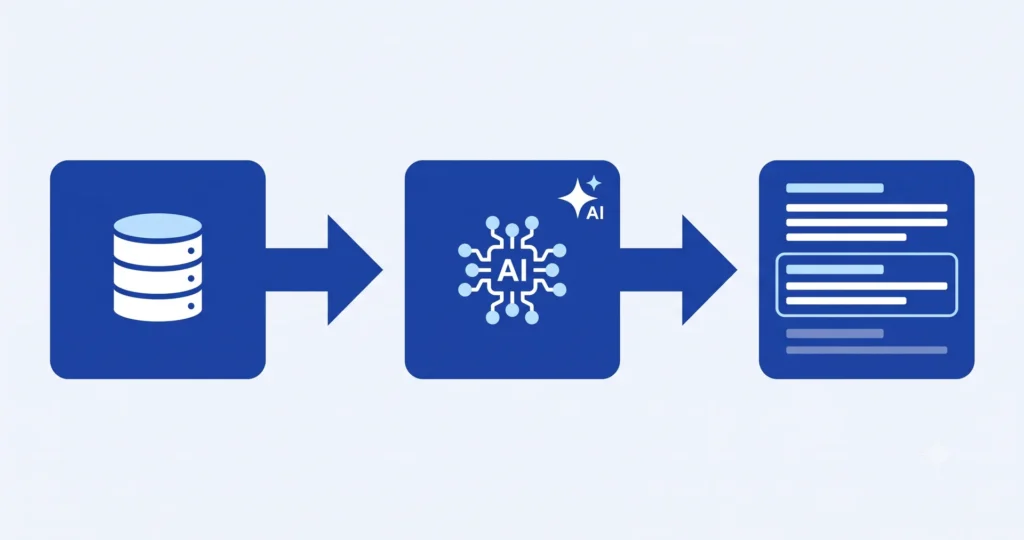
Gemini does not crawl the web on its own like an independent search engine. It relies on Google’s index, the same one that orders the organic results, and from there it selects the sources it builds its answer with.

The consequence is direct: if your site does not rank in Google, it will not appear in Gemini. Ranking acts as a prior filter. So the work starts where it always did, with solid SEO, and is completed with the signals the AI weighs when choosing who to cite. It does not skip classic SEO, it reinforces it.

Gemini vs ChatGPT: why they are not optimised the same way

Both are generative engines, but they draw on different sources, and that changes the strategy:

ChatGPT relies on Bing’s index and gives a lot of weight to content clarity and brand mentions.

Gemini relies on Google’s index, so your organic position counts for more: no ranking, no citation.

The good news is that the underlying work overlaps. Clear content, structured data and authority help with both. For the detail on the other engine, we explain it in our guide on how to appear in ChatGPT, and working on both at once multiplies your presence in AI search.

Diagrama del flujo de Gemini: el índice de Google pasa por el modelo de IA y genera una respuesta que cita una web como fuente

Gemini and AI Overviews: the same technology inside the search engine

It is worth understanding that Gemini and AI Overviews are two sides of the same thing. AI Overviews are the AI-generated summary Google shows at the top of many results, and that summary is produced by Gemini’s technology.

Optimising well for AI Overviews covers much of the work for the Gemini chat, because they share sources and criteria. In both cases Google favours pages in the top results, with direct answers and structured data. Appearing in the AI block gives you brand visibility verified by Google, even when the user does not click.

Technical SEO: indexing, speed and structured data

If Google cannot crawl or properly understand your site, Gemini rules you out straight away. These are the technical foundations:

  • Clean indexing: your key pages indexed and not blocked in robots.txt.
  • Speed and Core Web Vitals: a slow site loses ranking, and with no ranking there is no citation in the AI.
  • Structured data: mark up Article and FAQPage with Schema in JSON-LD so Google understands each page.
  • Up-to-date content: Gemini favours freshness, so review and update your content regularly.

It is the least glamorous part and, at the same time, the part that decides whether the AI can interpret you.

Conversational content and reusable blocks the AI cites

The AI does not reuse whole pages: it extracts fragments that stand on their own. For that to happen, every block of your content has to work out of context.

  • Headings that reproduce real questions users ask.
  • A direct answer in the opening lines of each section.
  • Clear lists and definitions, easy to extract.
  • Natural language, close to how people ask in a chat or by voice.

If a paragraph cannot be taken out of context and still make sense, it is no use to the AI. Writing this way also improves your classic SEO.

Authority, freshness and trust signals

When several sites say the same thing, Gemini does not choose the best written one but the one that conveys the most reliability. That trust is built outside your page:

  • Links and mentions in media and industry sites: they stop being purely SEO and become an authority signal.
  • Reviews that are real and well managed, reinforcing your reputation.
  • Brand consistency: the same details and message across directories and profiles.
  • Constant updating: recent content can beat older content even when the older one is correct.

Authority cannot be improvised: it is a sustained pattern that turns your site into a recommendable source.

How to get a local Barcelona business into Gemini

If you have a local business, Gemini can also recommend you when someone looks for a service near their location. And here Barcelona and Catalonia have their own rules:

  • An optimised Google Business Profile, with categories, services, photos and reviews kept up to date.
  • Local SEO: geotargeted pages and a consistent NAP across quality directories.
  • Proximity content: answering searches of the service-plus-city kind.

We work daily on local rankings for companies in Barcelona, Igualada, Terrassa, Sabadell and across Catalonia: the combination of an optimised listing, reviews and local signals is what gets a business showing up both on the map and in AI answers.

How to tell whether your site already appears in Gemini

Before putting effort in, it is worth knowing where you stand. These are the practical ways to check:

  • Ask Gemini: put questions from your sector to it and see whether your brand appears among the cited sources.
  • Check the AI Overviews: search Google, signed in, for the queries you want to appear for and see whether you are cited.
  • Measure in GA4 and Search Console: identify the traffic and impressions arriving from AI search.

Tools such as SE Ranking, Ahrefs and Semrush now include AI Overview tracking, though reliability varies. Taking this initial snapshot lets you measure progress.

Mistakes that keep you out of Gemini

Many sites do not appear in Gemini because of avoidable faults. The most frequent:

  • Not ranking in Google: with no ranking, the AI does not even consider you.
  • Long paragraphs with no direct answer and headings that are not questions.
  • A lack of structured data, which stops Google understanding the page.
  • Out-of-date content, with a modification date from years ago.
  • CTAs scattered through the text that break readability and make extraction harder.

Fixing these points usually produces quick results, because you are not competing to create something new: you are getting out of your own way.

A final checklist and what AI visibility costs

An actionable summary to start today:

  • Rank in Google whatever you want the AI to cite.
  • Mark up Article and FAQPage with structured data.
  • Rewrite your key pages in a question-and-answer format.
  • Work on authority, reviews and content freshness.
  • Optimise your Google listing if you are a local business.
  • Measure your visibility in AI Overviews and Gemini.

What does it cost? It depends on the state of your site and your sector, just as with traditional SEO, and it makes sense to integrate it into a wider search strategy.

Want to get your business into Google’s AI?

We work on your site’s visibility in Gemini, AI Overviews and search, with a measurable plan and no minimum terms.

See our SEO pricing

Frequently asked questions about appearing in Gemini

There is no paid route to having Gemini recommend your business organically within its answers. Visibility depends on your rankings in Google, the quality of your content and your brand’s authority.

Yes. Gemini relies on Google’s index, so if your site does not rank in the search engine, the AI will not consider it as a source. Classic SEO is the essential starting point.

There is no fixed timescale. Technical and content improvements can show within weeks, while gaining ranking and authority, which is what Gemini uses as a filter, usually takes several months, just like SEO.

They share principles, but they are not the same. Gemini relies on Google’s index and gives more weight to your organic position; ChatGPT uses Bing and values clarity and mentions highly. A good strategy improves visibility in both.

Appearing as a cited source increases your visibility and trust in your brand, even when the user does not click. Combined with a site that converts, it translates into more enquiries and potential customers.

They are closely connected: AI Overviews are the AI summary Google shows in search, and it is generated by Gemini’s technology. Optimising for AI Overviews covers much of the work needed for Gemini to cite you, because they share sources and criteria.

Appearing in Gemini is not a one-off trick: it is the consequence of a site that ranks well in Google, clear content and a brand with authority. Businesses that start working on it now will have the advantage when AI search becomes the norm. If you want your site to be one of the sources Google’s artificial intelligence chooses and recommends, JRC Web can help you get there.

How useful did you find this content?

Click a star to rate it!

Average rating!0/ 5. Vote count0

No votes yet! Be the first to rate this post.

More News