GEO
GEO Agency: What It Does, What It Costs and How to Choose the Right One
What a GEO agency does, what it costs and how to choose one that gets ChatGPT, Gemini and Google’s AI Overviews to recommend your business.

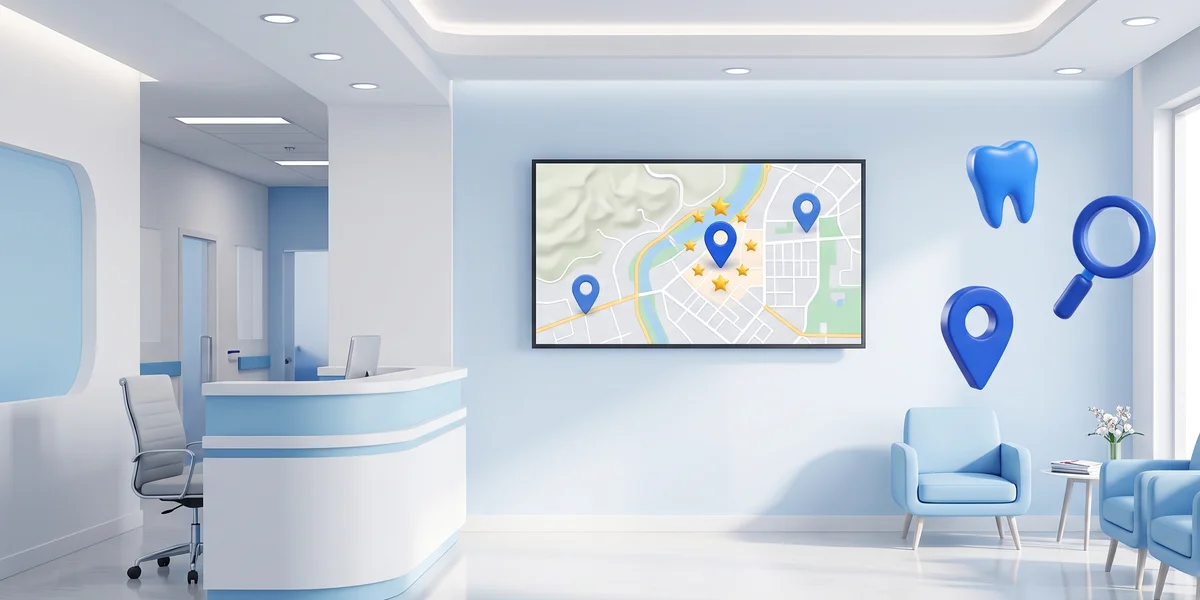
SEO for dental clinics is the work that gets a clinic to appear on Google, on Google Maps and in AI answers when a patient searches for a treatment or a dentist in their area. It combines one page per treatment, a well kept Google profile and genuine reviews, and SEO specialists in Barcelona adapt it to the demands of a healthcare sector so that AI Overviews and ChatGPT can also cite the clinic.
SEO for dental clinics is the set of actions that make a clinic’s website and Google profile appear when someone searches for a treatment, a nearby dentist or a question about their teeth. It is not just about climbing positions: the goal is for that visit to end in a call, a WhatsApp message or a booked appointment.
What sets it apart from SEO for a shop or a restaurant is that Google classifies health as YMYL content (Your Money or Your Life), meaning topics where poor information can harm the reader. For these websites the search engine demands stronger signals of experience, expertise, authority and trust before ranking them at the top.
In practice, a nice looking website is not enough. Each page has to explain the treatment properly, show which professional signs it, keep the clinic’s details consistent across the internet and display genuine patient reviews. A clinic that looks after these points competes with an advantage over another one with a bigger budget but a generic website, because Google rewards trust over the sheer volume of text.
Before booking, a patient almost always goes through three types of search, and each one needs different content on the clinic’s website.
The first is informational: what a root canal is, whether an implant hurts or how long clear aligner treatment lasts. Google increasingly shows AI generated summaries here, and the goal is for your content to be one of the sources it cites.
The second is comparison: implant prices in Barcelona, reviews of a clinic or the difference between veneers and whitening. The patient already knows what they want and is choosing where to get it. These searches are very valuable, because whoever arrives is close to deciding.
The third is the local decision: dentist in Gràcia, dental clinic open today or emergency dentist near me. Here the Google map rules, and the three profiles shown at the top take most of the clicks and calls.
A good strategy covers all three stages at once: articles that answer questions, treatment pages that persuade and a Google profile ready to turn a search into a call or an appointment.
The most common mistake on clinic websites is having a single services page with one paragraph per treatment. Google ranks pages, not whole websites, and a page that talks about implants, orthodontics and whitening at the same time fails to stand out in any of those searches.
The right approach is to create a dedicated URL for each main treatment, such as implants, orthodontics, periodontics, cosmetic dentistry or paediatric dentistry. Each one needs its own title, its own description and content that answers what the patient wants to know before booking:
When the clinic serves several areas, pages combining treatment and location can be added, always with different content on each one. Copying the same text and only changing the neighbourhood name does not help rankings and can reduce the trust in the whole website.
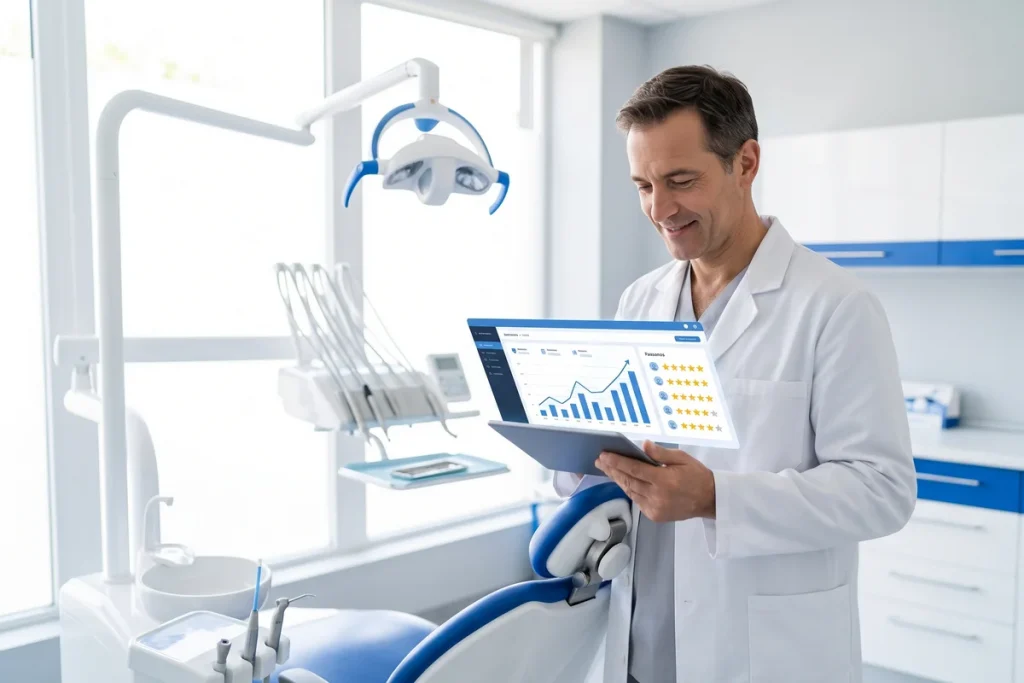
For a dental clinic, the Google Business Profile is often the most profitable entry point. It is what appears on the map when someone searches for a nearby dentist, and whoever sits in the top three positions gets most of the calls. If you want to review the basics, this guide explains how local SEO works step by step.
The points that carry the most weight in a dental profile are these:
On top of this comes NAP consistency: name, address and phone number identical on the website, the profile and directories such as Doctoralia or Top Doctors. A small difference, like a phone number with or without the prefix, makes Google unsure which detail is correct and slows down map rankings.
A large share of patients look for a dentist on their phone, often in a hurry or in pain. If the website is slow or the call button is hard to find, that patient goes back and calls the next clinic. That is why technical SEO is not a minor detail, it is part of patient acquisition.
The minimum a clinic website should meet is:
Schema is code the patient does not see but Google and AI assistants do. It tells them in an orderly way what the clinic is, where it is, what its opening hours are and which treatments it offers. Without it the information exists, but search engines find it harder to understand and display properly in the results.
In a healthcare sector, Google wants to know who is behind what gets published. An unsigned article about implants carries less weight than the same text reviewed by a dentist whose name, surname and registration number are visible.
The trust signals worth working on are:
These signals do not only help rankings. They are the same ones a patient checks before trusting their mouth to someone they do not know, and also the ones AI models use to decide which source is reliable when they answer a question about dental health.
A dental clinic website is not just any commercial website. Healthcare advertising has its own rules and professional colleges monitor what gets published, so SEO has to respect those limits from the very first text.
In general, it is best to avoid:
None of this prevents writing content that ranks. On the contrary, an honest text that explains when a treatment is indicated, what the alternatives are and what the price depends on usually works better both on Google and with patients. The key is to inform without overselling.
Before publishing campaigns or pages with prices and promotions, the prudent step is to review them with the clinic’s healthcare lead or to check with the professional college, because the criteria can vary between Spanish regions.
Doing SEO for a clinic in Barcelona has particularities that general guides rarely mention. The first is language. Many patients search in Spanish, but a significant share search in Catalan, with queries such as dentista a prop or clínica dental a Sant Andreu. A website only in Spanish misses those searches, and a poorly reviewed machine translation signals little care.
The second is competition by neighbourhood. In a city with so many clinics, competing for dentist in Barcelona is very hard, while dentist in Sants, Sarrià or Poblenou has far less competition and a patient with a very clear intent. The same happens in towns such as Sabadell, Terrassa, Badalona or Igualada.
The third is the directories that matter here: Doctoralia, Top Doctors, the register of licensed dentists and the local guides of each town. Having a complete and consistent profile on all of them strengthens rankings and gives AI more sources where it can find the clinic.
Finally, the Google profile, the website and the directories should use exactly the same trading name and the same address, in both languages.
The price of SEO for a dental clinic depends mainly on three things: the competition in the area, the number of treatments you want to rank and the starting condition of the website. A neighbourhood clinic in a mid sized town is not the same as an implant centre competing in central Barcelona.
As a guide, in the Spanish market a monthly service for a clinic usually ranges between 250 and 700 euros per month. A basic plan covers the Google profile, technical optimisation and one or two pieces of content a month. A more complete plan adds new treatment pages, links from media and directories, competitor analysis and follow up meetings. Groups with several clinics or highly contested specialities may need a bigger investment.
There may also be an upfront cost if the website needs rebuilding, which is common when it is old or very slow. When comparing proposals, look at which deliverables each month includes and whether there is a minimum term. A low price without clear goals usually ends up costing more than a slightly higher plan with defined reports and metrics.
We review your website, your Google profile and the competition in your area, and advise you on the plan that fits your clinic.
Some changes show quickly. Fixing the Google profile category, completing its services and starting to collect reviews can improve map visibility within a few weeks. Rewriting titles and descriptions of pages that already have impressions also tends to bring more clicks in a short time.
Stable organic rankings, on the other hand, are built over months. It is common to see clear progress between the third and sixth month and to consolidate results between six and twelve months, depending on the competition and the starting point.
To know whether SEO is working, looking at positions is not enough. What matters is measuring what actually reaches the clinic:
With Google Analytics 4, Search Console and the profile statistics you can build a simple dashboard that links each month the work done with the enquiries received. Without tracking there is no way to know which treatments bring patients and which do not.
More and more patients ask their questions directly to AI: what an implant is like, what the alternative to braces is or how much a cleaning costs. Google answers many of these queries with a generated summary at the top, and ChatGPT, Gemini or Perplexity do the same when asked about a treatment or a clinic in an area.
For your clinic to be one of the sources they cite, the content has to be easy to extract and reliable:
There is no way to guarantee that an AI will name you, but there is a way to increase the odds. Clinics that already work their SEO well have come a long way, because assistants rely on the same pages that Google considers trustworthy.
There is no fixed number, because it depends on the competition in each neighbourhood. More than the total, what counts is that reviews arrive steadily, that they are recent, that they include text and that the clinic replies to them. A good benchmark is to look at the profiles shown at the top in your area and keep a monthly pace of new reviews above theirs.
They complement each other. Google Ads brings patients from day one, but every click is paid and visibility disappears when the campaign stops. SEO takes longer, but it gives a stable presence that does not depend on a daily budget. The usual approach is to use Ads for the most profitable treatments while SEO grows, and then adjust the investment based on results.
It is not mandatory, but it is highly recommended. Many patients search for a dentist in Catalan and a website only in Spanish does not compete in those searches. A well built bilingual version, with separate URLs and hreflang tags, allows ranking in both languages and feels closer to whoever lands on the website.
In many cases, yes. You can improve titles and descriptions, create treatment pages, fix technical errors and optimise the Google profile without changing the website. If the site is very slow, does not adapt well to mobile or makes it hard to create new pages, it is worth considering a redesign before investing in content.
Google picks the sources for its summaries from well ranked, trustworthy pages. To be in with a chance, the clinic needs content that answers real questions with clear definitions, visible professional authorship, FAQPage and MedicalProcedure structured data and a solid SEO foundation. Appearing cannot be guaranteed, but these measures greatly increase the odds.
A dental clinic competes on a field with its own rules: Google demands more trust from it than from other businesses, healthcare advertising limits what it can say and most patients choose it on the map, on their phone and within seconds. Generic SEO tends to stop at keywords and forgets everything else.
Specialised SEO organises the website by treatment, looks after the Google profile and reviews, strengthens the authorship of the professionals and prepares the content so that AI assistants can cite it too. Above all, it measures what really matters to the clinic: calls, messages and new patients. At JRC Web we work this way with clinics in Barcelona and across Catalonia, starting with an honest review of the current situation and clear goals from the first month.
How useful did you find this content?
Click a star to rate it!
Average rating!0/ 5. Vote count0
No votes yet! Be the first to rate this post.
What a GEO agency does, what it costs and how to choose one that gets ChatGPT, Gemini and Google’s AI Overviews to recommend your business.

Learn how to set up conversion tracking in Google Ads step by step: the three methods, Google Tag Manager, enhanced conversions and the common mistakes that ruin your data.
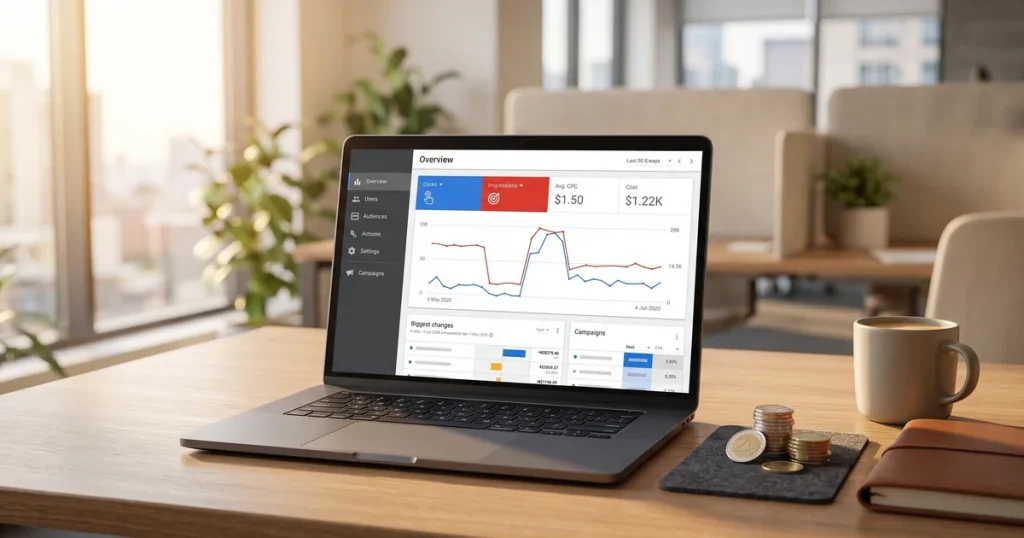
How much Google Ads costs: what you pay Google, what an agency charges to manage it and what budget you need for it to pay off.