Digital advertising
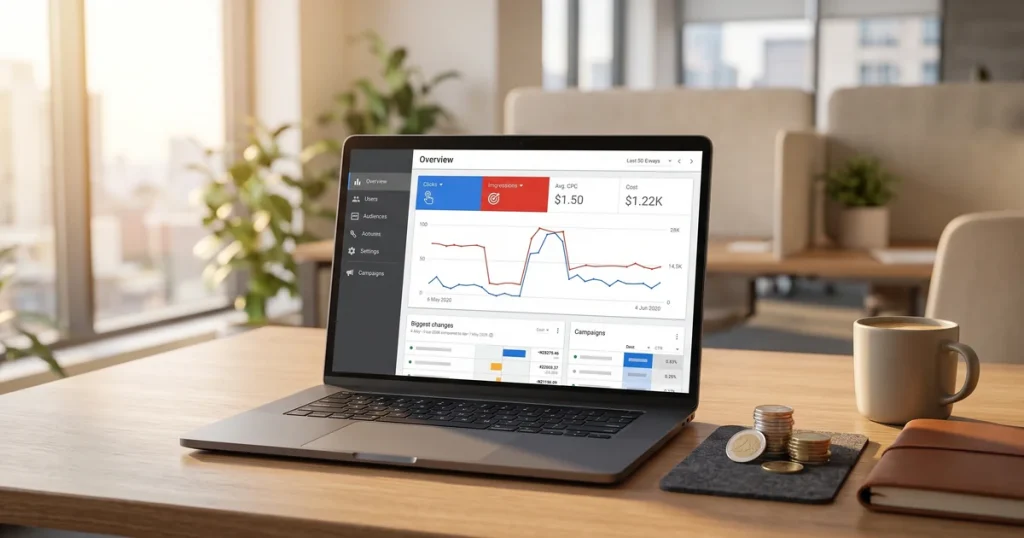
How much Google Ads costs: spend, management fees and a realistic budget
How much Google Ads costs: what you pay Google, what an agency charges to manage it and what budget you need for it to pay off.
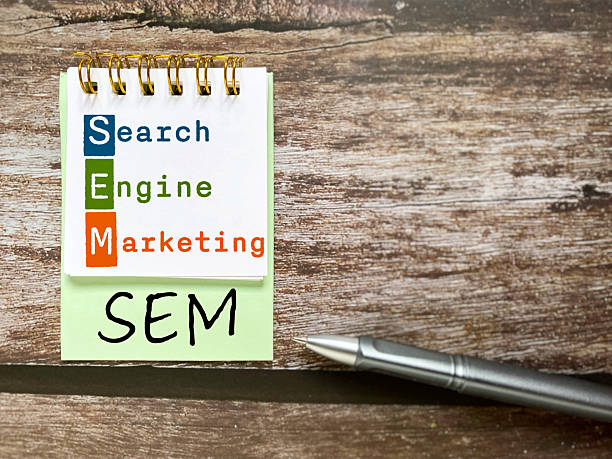
SEM (Search Engine Marketing)is the set of digital marketing strategies that use paid advertising to increase a website’s visibility in the search results.
Technically SEM covers all search engine marketing (including SEO), but in industry practice it is mainly used to mean paid advertising on platforms such as Google Ads or Microsoft Advertising.
SEM lets companies buy instant visibility, appearing for specific searches when users have purchase intent or are looking for relevant information.
SEM works through a real-time auction system. Every time someone searches, an instant auction decides which ads to show and in what order.
Google weighs several factors besides money:
A high-quality ad can beat one with a higher bid, and pay less per click into the bargain.
The most common payment model in SEM is PPC (Pay Per Click) . You only pay when someone clicks your ad, not for showing it.
CPC varies enormously with the sector and the competition:
Google Ads dominates the SEM market, but there are other platforms that may matter to your strategy:
The leading platform, with more than 90% market share in Spain. It covers search, Display, Shopping, YouTube and more. It is where any SEM strategy should start.
Ads on Bing, Yahoo and DuckDuckGo. Lower volume, but also less competition and lower CPCs. Worth adding as a complement, especially for B2B.
If you sell products on Amazon, its advertising platform is essential. Amazon users have high purchase intent.
They are not technically SEM (they are not search engines), but platforms such as Meta Ads (Facebook/Instagram) and LinkedIn Ads complement digital marketing strategies with different targeting goals.
SEM offers advantages other digital marketing strategies cannot match:
Unlike SEO, which can take months to produce results, SEM brings traffic from day one. Ideal for launches, promotions or whenever you need results quickly.
People searching on Google have an active need. They are looking for solutions, not browsing passively. That translates into higher conversion rates than other channels.
You decide how much to spend (daily and monthly budget), when to show ads (days, hours), to whom (location, language, device) and for which searches (keywords).
You know exactly which keywords, ads and campaigns deliver results. You can calculate ROI accurately and optimise continuously.
If something works, you can increase the budget and scale the results. If it does not, you can pause immediately with no long-term commitment.
Understanding the difference between SEO and SEM is essential for knowing when to use each:
They are not mutually exclusive. The most effective strategy usually combines both: SEM for immediate results while SEO develops. Over time, SEO can carry more of the load and reduce your dependence on paid advertising.
SEM is one of the most effective ways of winning customers while they are actively looking for what you offer. Running profitable campaigns, though, takes experience, time and knowledge not every company has in house.
At JRC Web we offer full SEM campaign management. We do not just create and optimise campaigns; we focus on what really matters: making every euro invested deliver the maximum possible return.
As a digital marketing agency in Barcelona, we combine SEM with SEO so your business has a complete presence in the search results, both paid and organic.
Want to start with SEM or improve your current campaigns? Get in touch and we will review your case with no commitment.
Keywords are the heart of SEM. Choosing the right ones decides whether your campaign is profitable or a waste of money.
Just as important as the positive ones. They exclude irrelevant searches so you do not waste budget. For example, if you sell “in-person English courses”, add “free” and “online” as negatives.
Good keyword research is fundamental. Use the Google Ads Keyword Planner to find relevant keywords, see volumes and estimate costs.
Writing effective ads is an art. You have limited space to convince someone to click your ad rather than the others.
The landing page matters as much as the ad. You can have the best ad in the world, but if the landing page does not convince, you have paid for the click for nothing.
Google assesses the landing page experience. A slow, irrelevant page with a poor user experience lowers your Quality Score, which means paying more per click and appearing in worse positions.
Professional, conversion-oriented web design makes a big difference to the ROI of your SEM campaigns.
Without proper measurement, SEM is like throwing darts blindfolded. Conversion tracking is essential.
A valuable action you want the user to take: a purchase, a form submission, a phone call, a download, a sign-up. It depends on your business model.
Click to rate this post!
How useful did you find this content?
Click a star to rate it!
Average rating!0/ 5. Vote count0
No votes yet! Be the first to rate this post.
How much Google Ads costs: what you pay Google, what an agency charges to manage it and what budget you need for it to pay off.
Web design for freelancers in Barcelona: which pages you need, what it costs and how to get a professional, affordable website that wins clients.

What AI search optimisation (GEO) is and how to get ChatGPT, Gemini and Perplexity to recommend your company in Barcelona.