Digital advertising

How much Google Ads costs: spend, management fees and a realistic budget
How much Google Ads costs: what you pay Google, what an agency charges to manage it and what budget you need for it to pay off.

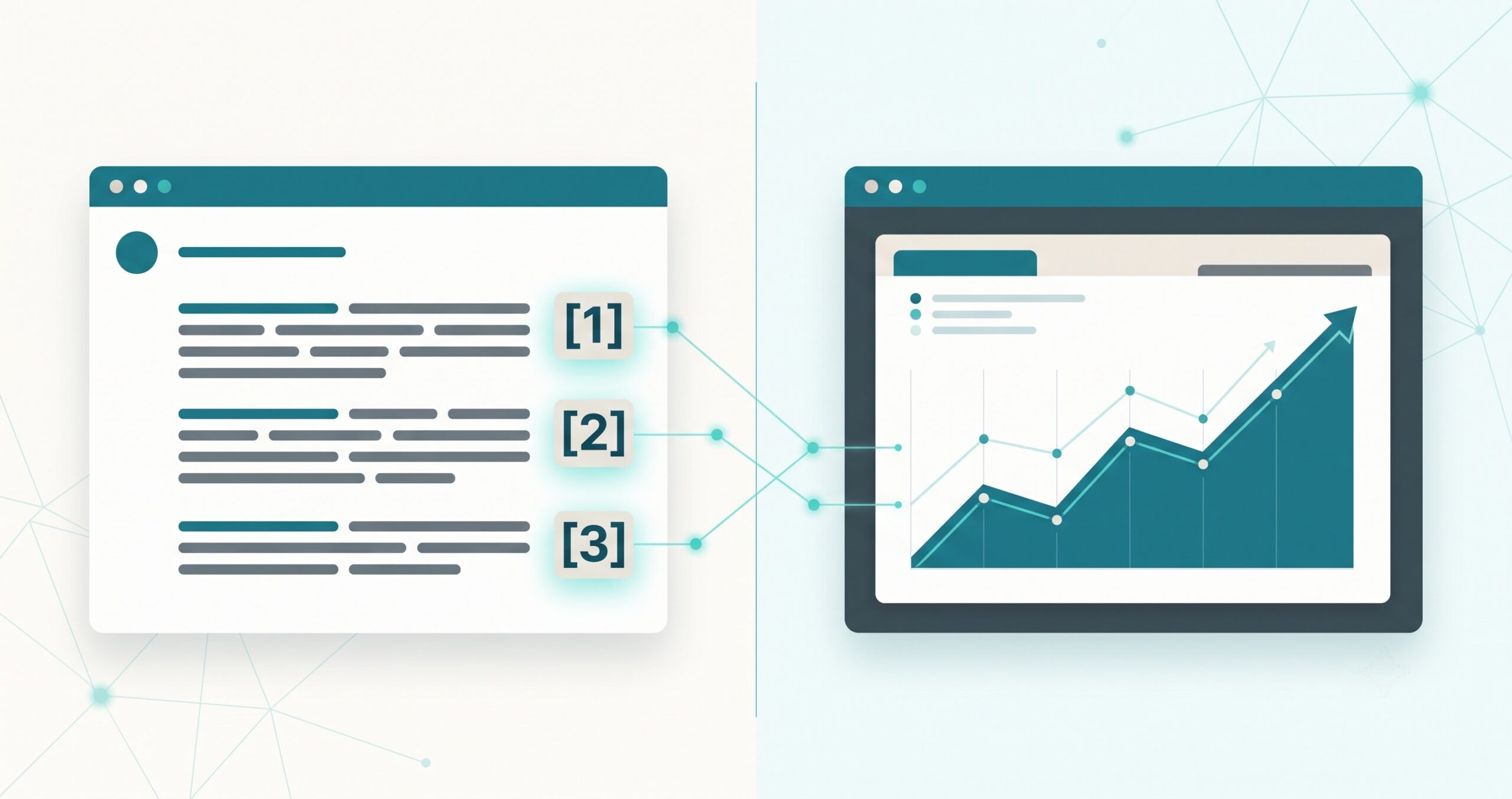
Appearing in Perplexity means this AI answer engine cites your site as a source when someone asks it a question related to your business. Unlike other models, Perplexity always shows its sources with a direct link, so being cited brings you real, qualified traffic. It relies on its own crawler and on real-time search, and it shares very few sources with Google’s top results, which opens an opportunity almost nobody is exploiting yet, AI Overviews included. As SEO specialists in Barcelona, we prepare your site so the AI finds you, understands you and recommends you.
Appearing in Perplexity means this conversational search engine cites you as a source within the answer it generates, with a number and a direct link to your site. You are not competing for a list of ten results, you are competing to be one of the few sources the AI considers reliable enough to answer with.
The big difference from Google is twofold. First, the answer arrives already resolved, so only the cited sites get through. Second, Perplexity always shows those citations visibly, something neither ChatGPT nor Gemini does by default. That is why a click from Perplexity is highly qualified traffic: the user already knows what they are looking for.
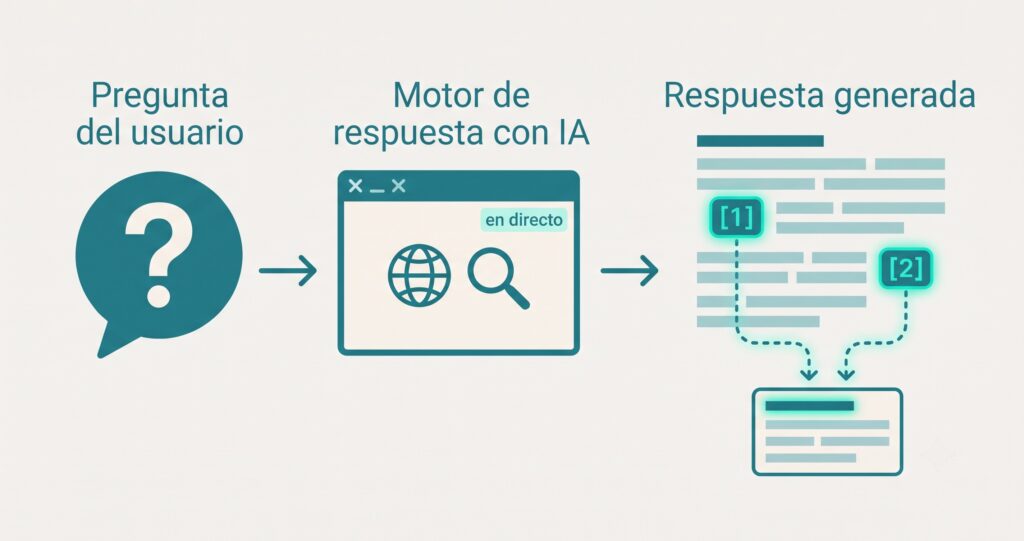
Perplexity is not a chatbot answering from memory. It works with RAG (retrieval-augmented generation): when it receives a query, it first searches the web in real time, selects the best sources and then writes the answer citing them.
For that it uses its own crawler, PerplexityBot, and its own index, rather than relying solely on Google’s. In fact it shares only a minority of sources with Google’s top results, which means there are sites that barely stand out in the search engine and yet appear cited in Perplexity. Understanding this is key: ranking in Google is not enough, you have to be crawlable and citable for this particular AI.
All three are AI engines, but they behave differently and should not be treated the same:
Perplexity always shows numbered citations with a link, has its own index and favours fresh, verifiable content. It is the best engine to start measuring with, because results show quickly.
ChatGPT relies on Bing’s index and gives a lot of weight to clarity and brand mentions, though it does not always link the source.
Gemini relies on Google’s index, so your organic position counts for a lot.
The good news: the underlying work overlaps. For the detail on OpenAI’s case, we explain it in our guide on how to appear in ChatGPT, and working on all three at once multiplies your presence in AI search.
This is the first filter and the most overlooked: if you block PerplexityBot in your robots.txt file, this AI cannot read your site and will never cite you, however good your content is.
It is a five-minute technical check that decides whether you are in the game or out of it from the start.
Perplexity cites fragments, not whole pages. For it to use you as a source, your content has to be easy to extract and to verify:
If a paragraph needs the rest of the article to be understood, it is no use to the AI. Writing this way also improves your traditional SEO.
How you organise the page helps Perplexity understand and cite you. Two elements make the difference:
A properly marked-up FAQ section is about the most citable thing there is, because it is already in the format the AI is looking for: a clear question and a short, self-contained answer.
When several sites answer the same thing, Perplexity picks the one that conveys the most trust. That authority is built mostly outside your page:
Authority cannot be bought or improvised, it is built through consistency, and it is what turns your site into a recommendable source.
If you have a local business, Perplexity can also recommend you when someone looks for a service in their area. And here Barcelona and Catalonia have their own rules:
We work daily on local rankings for companies in Barcelona, Igualada, Terrassa, Sabadell and across Catalonia. That combination of an optimised listing, reviews and local content is what gets a business showing up when the AI recommends nearby options.
Before putting effort in, it is worth seeing where you stand. Practical ways to check:
There are AI visibility monitoring tools that automate this tracking, though reliability varies. Taking this initial snapshot lets you know whether the work is paying off.
Many sites do not appear because of avoidable faults. The most common:
Fixing these points usually produces quick results, because you are not competing to create something new but to stop getting in your own way.
An actionable summary to start today:
What does it cost? It depends on the state of your site and your sector, just as with traditional SEO, and it makes sense to integrate it into an ongoing search strategy.
We work on your visibility in Perplexity, ChatGPT, Gemini and Google’s AI Overviews, with a measurable plan and no minimum terms.
There is no paid option for having Perplexity cite you organically in its answers. Visibility depends on your site being crawlable, having citable content and carrying authority. Advertising does exist, but it is different from appearing as a recommended source.
Not essentially. Perplexity has its own index and crawler, and shares few sources with Google’s top results, so there are sites that appear in Perplexity without dominating the search engine. Even so, good SEO and authority help in both places.
It is usually faster than other engines. If your site is crawlable and the content is solid, the first citations can arrive within a few weeks. That is why Perplexity is the best starting point for measuring your AI visibility.
They share principles, but they are not the same. Perplexity uses its own index and always cites the source; ChatGPT relies on Bing and values clarity and mentions highly. A good content and authority strategy improves your presence in both.
Yes, and it usually converts better than general traffic. Someone arriving from Perplexity has already received an answer and clicks to go further or to hire, so they arrive with clear intent. It is qualified traffic, even if the volume is smaller than Google’s.
No, they are different but related. AI Overviews are the AI summary Google shows in its results, generated with its own technology, while Perplexity is a separate engine with its own index. The good news is that optimising to be citable, with clear content, data and structure, helps you appear in both.
Appearing in Perplexity is not a matter of luck: it is the result of a crawlable site, clear, citable content and a brand with authority. It is also the best place to start measuring your AI visibility, because results show quickly. If you want your site to be one of the sources artificial intelligence chooses and recommends, JRC Web can help you get there.
How useful did you find this content?
Click a star to rate it!
Average rating!0/ 5. Vote count0
No votes yet! Be the first to rate this post.
How much Google Ads costs: what you pay Google, what an agency charges to manage it and what budget you need for it to pay off.

Web design for freelancers in Barcelona: which pages you need, what it costs and how to get a professional, affordable website that wins clients.
What AI search optimisation (GEO) is and how to get ChatGPT, Gemini and Perplexity to recommend your company in Barcelona.